Shop the Archive
Prints, wearables, and reference goods adapted from the CAN O' visual archive.
Selected materials are produced in small runs for collectors, designers, and interested households.
Visit Store
CAN O' BEANS
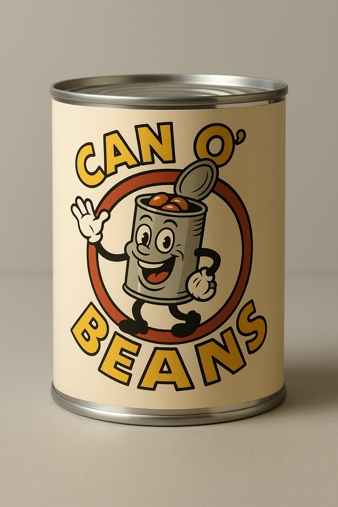
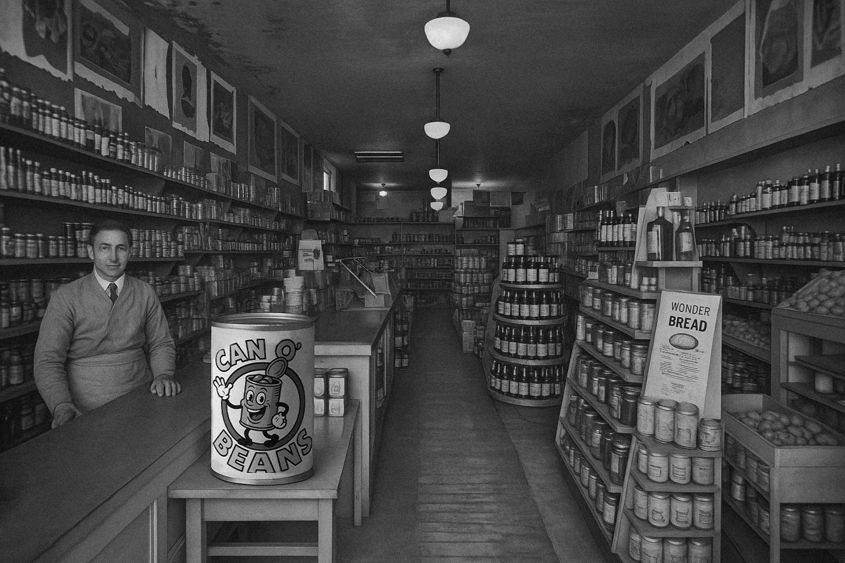
Introduced in 1947, CAN O' Beans appeared in regional grocery accounts as a dependable postwar staple distinguished by its red ring, cream stock, and unusually animated label character. Store ledgers from the first commercial run describe steady movement in urban neighborhoods where shelf stability and low price remained central to household planning.
The packaging was designed for legibility among mixed wartime and postwar inventory. Trade notes from independent grocers treated the label almost as a sign of return: when beans in the CAN O' format began moving by the case, a neighborhood was considered, in the language of the period, back on ordinary terms.
CAN O' MILK
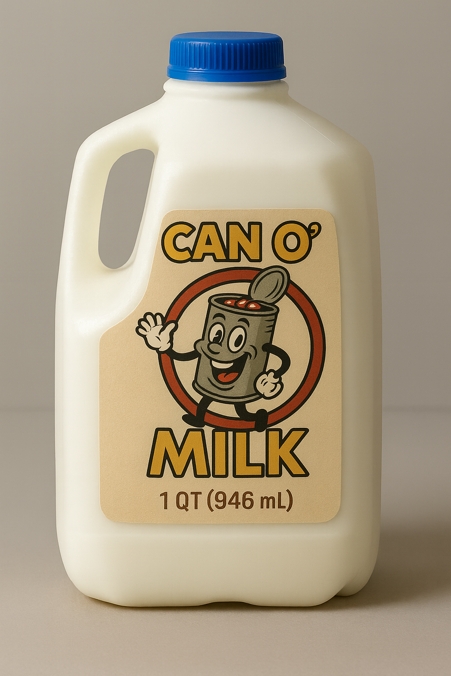
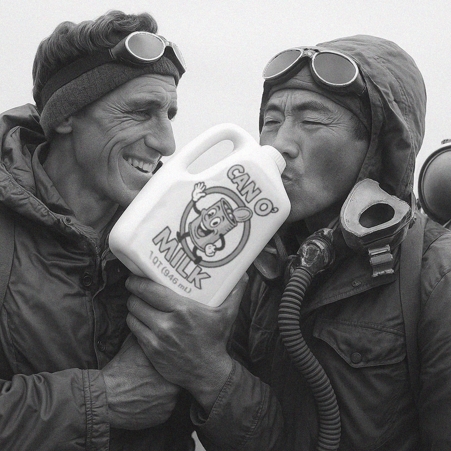
CAN O' Milk entered distribution in 1953, the same year high-altitude provisioning became a popular shorthand for national capability. Company literature positioned the product as a shelf-stable dairy format suitable for homes, camps, municipal stores, and temporary transport interruptions.
Civil-defense purchasing summaries from the period show interest in compact dairy reserves, although surviving references rarely distinguish between approved procurement and demonstration stock. The label itself balanced domestic familiarity with technical assurance, a combination that suited the decade's appetite for useful preparedness.
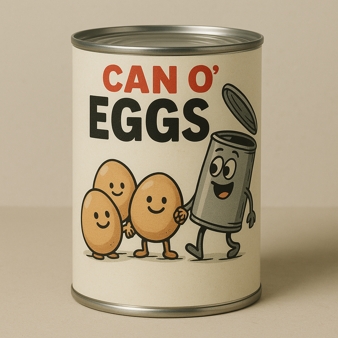
CAN O' EGGS
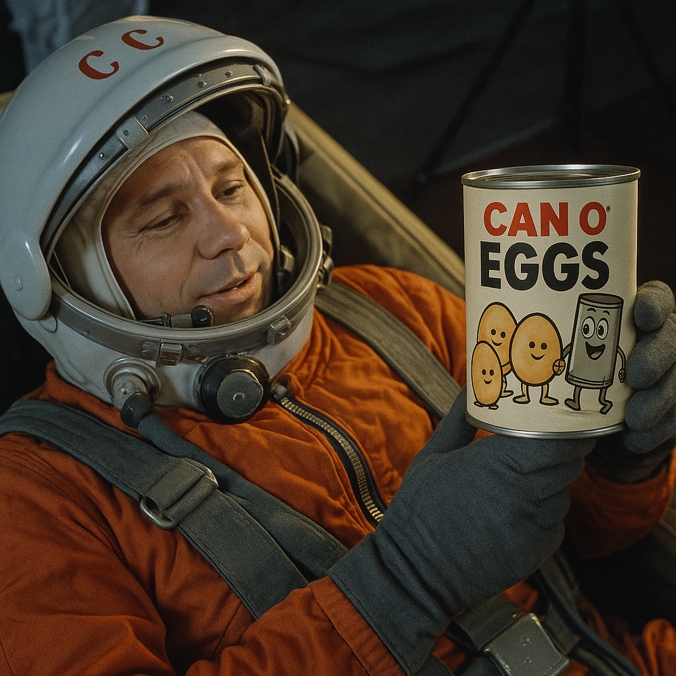
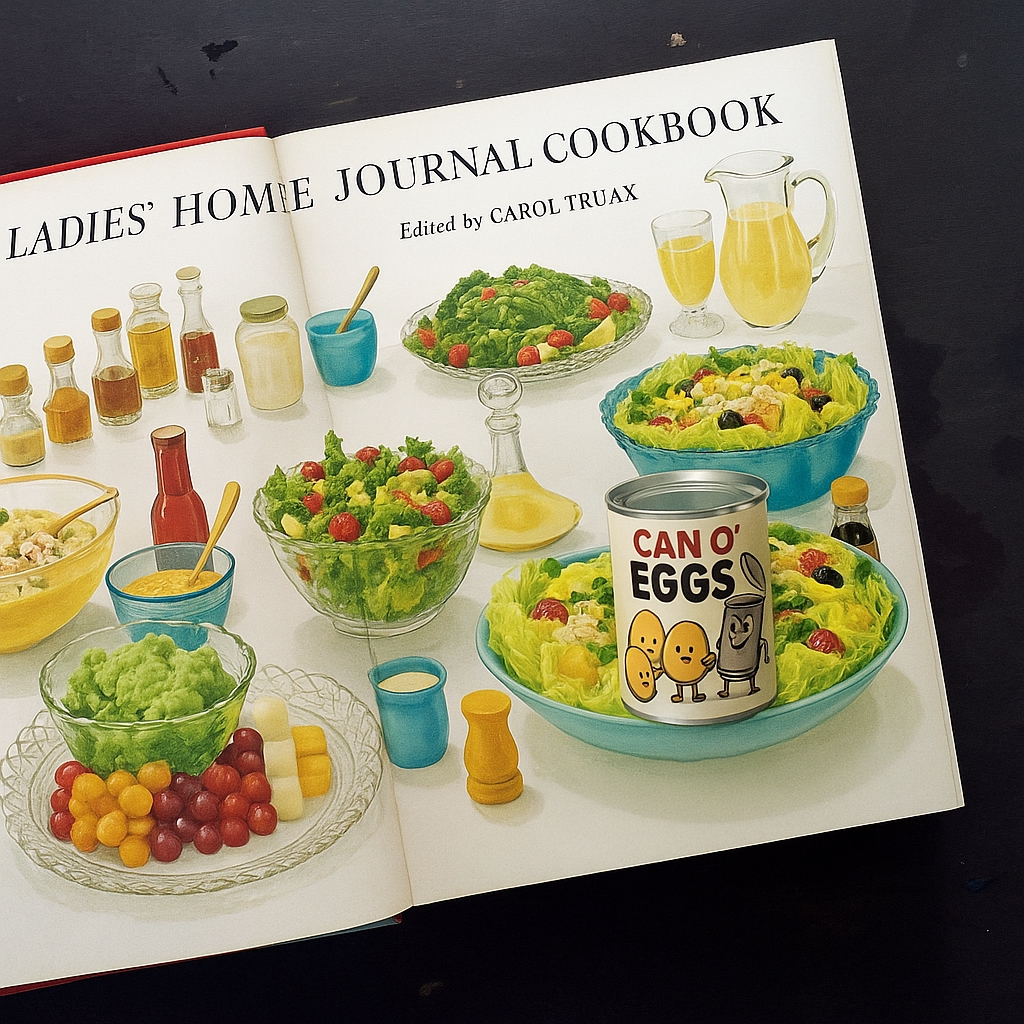
Announced in 1961, CAN O' Eggs belonged to a short-lived group of stabilized breakfast products marketed through the language of systems, storage, and modern kitchens. Procurement records do not show a formal aerospace order, but demonstration samples appear in several institutional-food service files from the same year.
Culinary journals treated the format with cautious interest. For cafeterias, hotels, and test kitchens, the attraction was not novelty alone but portion control, reduced breakage, and a product name plain enough to sound almost administrative.
CAN O' CANS
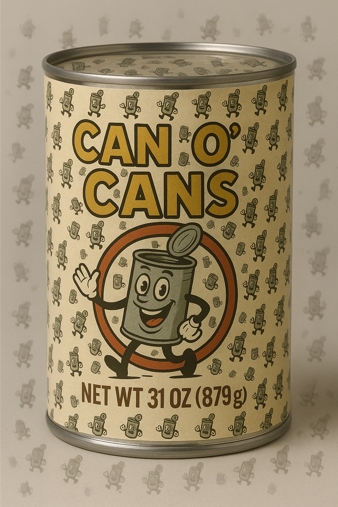
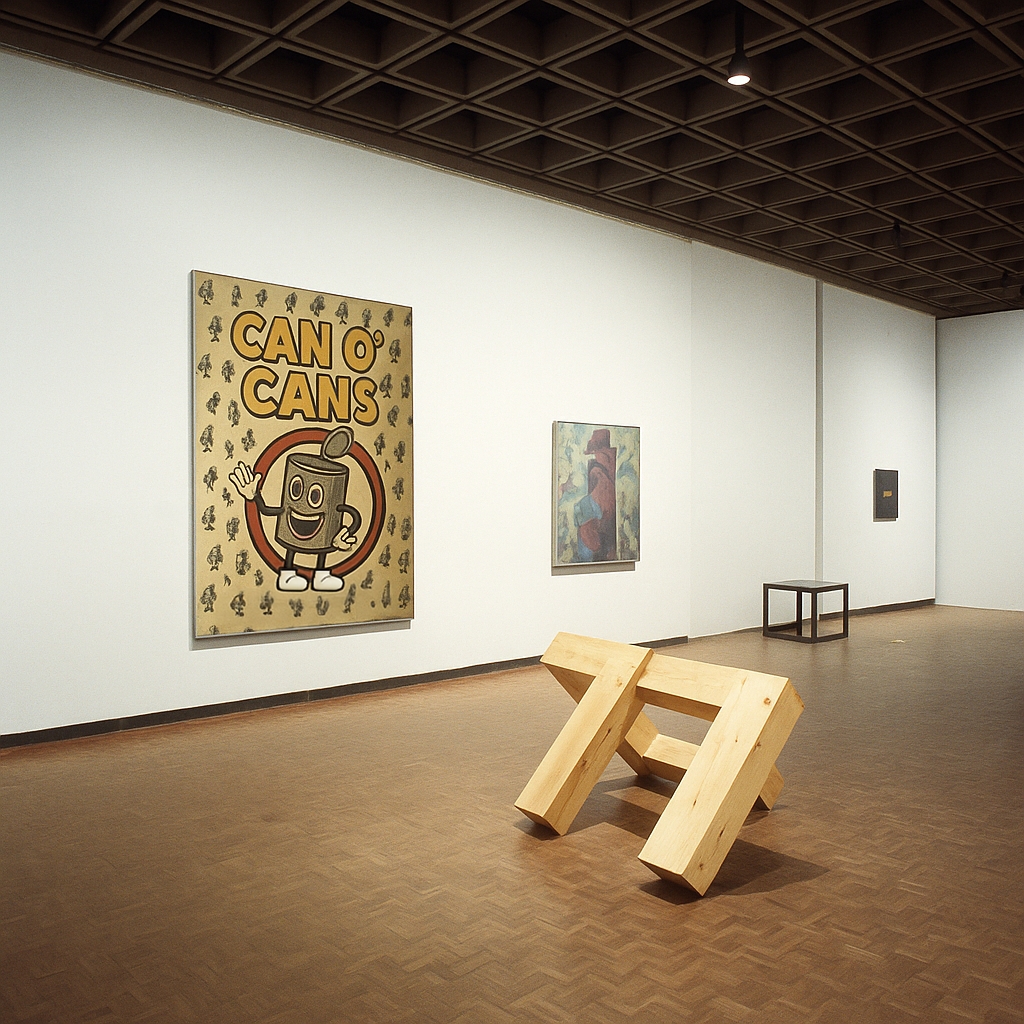
CAN O' Cans was issued in 1974 as a limited series and later entered several discussions of repetition in consumer packaging. The object was described in one museum checklist as a container product concerned with its own container logic, a phrase that appears to have followed the item longer than the production run itself.
Retail records suggest unusually strong sales near campuses, museum shops, and government districts. Whether the run was purchased as utility, souvenir, or commentary is difficult to separate in the surviving material, which may explain why it remains one of the most cited CAN O' releases.
CAN O' LIGHTBULBS
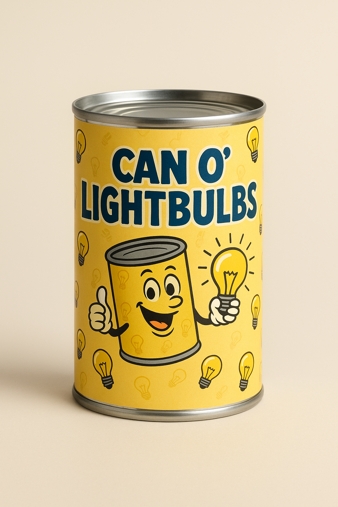
Released after the 1977 New York blackout, CAN O' Lightbulbs presented domestic preparedness in an unusually compact retail form. Hardware partners stocked the assortment as a ready household reserve, usually positioned between batteries, fuses, and emergency candles.
Field notes from consumer surveys describe the product as practical but also reassuring. It placed ordinary replacement bulbs inside a pantry-style package, giving infrastructure anxiety the familiar shape of a kitchen purchase.
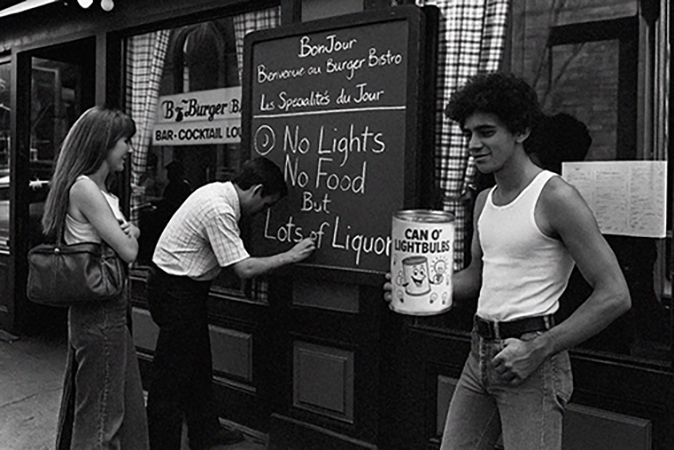
CAN O' WALLOP
Introduced in 1983, CAN O' Wallop marked a clear turn toward strength-oriented branding. The product circulated through gyms, commissary trials, and television-adjacent promotions, where its block lettering and compact form aligned with broader 1980s imagery of discipline and personal resolve.
The best-known promotional materials feature Mr. T, whose public persona made him a natural fit for the campaign's language of endurance. Surviving interview notes emphasize perseverance more than aggression, a distinction the brand repeated consistently across point-of-sale materials.
Later accounts treat Wallop as a useful artifact of the decade: celebrity endorsement, fitness culture, commodity patriotism, and motivational language condensed into one highly assertive package.
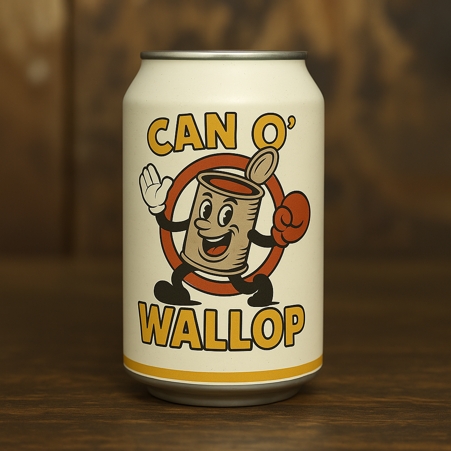

NEON ERA
The 1985 campaign introduced the line Your New Life, Unsealed and moved CAN O' into a brighter, export-oriented visual language. Chrome lettering, gridline horizons, and saturated color fields appeared across youth magazines, broadcast graphics, and international distributor sheets.
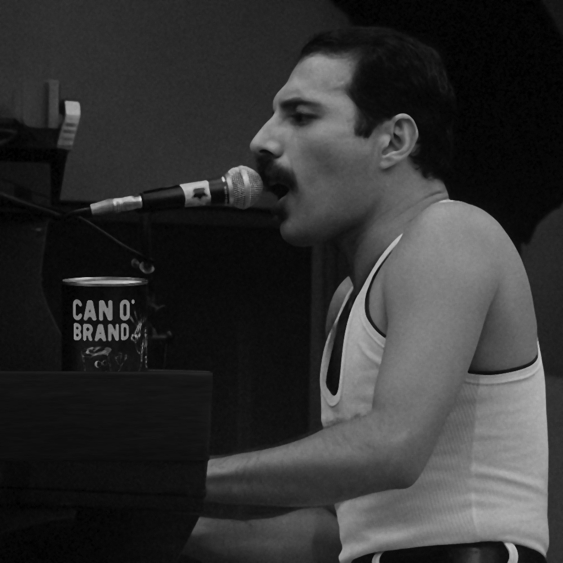
Internal summaries from the period describe the campaign as a transition from product recognition to mark recognition. In practice, the package became a portable sign system: simple enough for shelf use, but flexible enough to appear in music, apparel, and event photography.
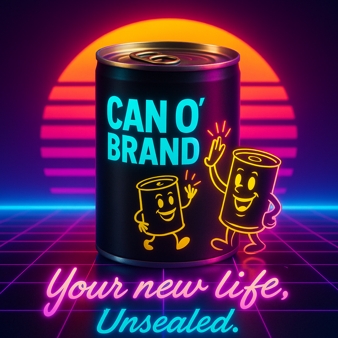
CAN O' BOTTLED WATER
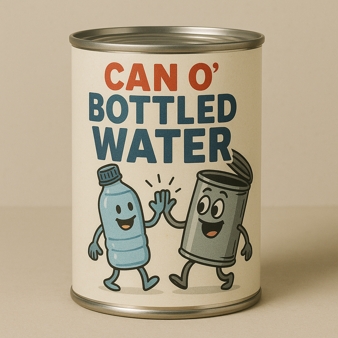
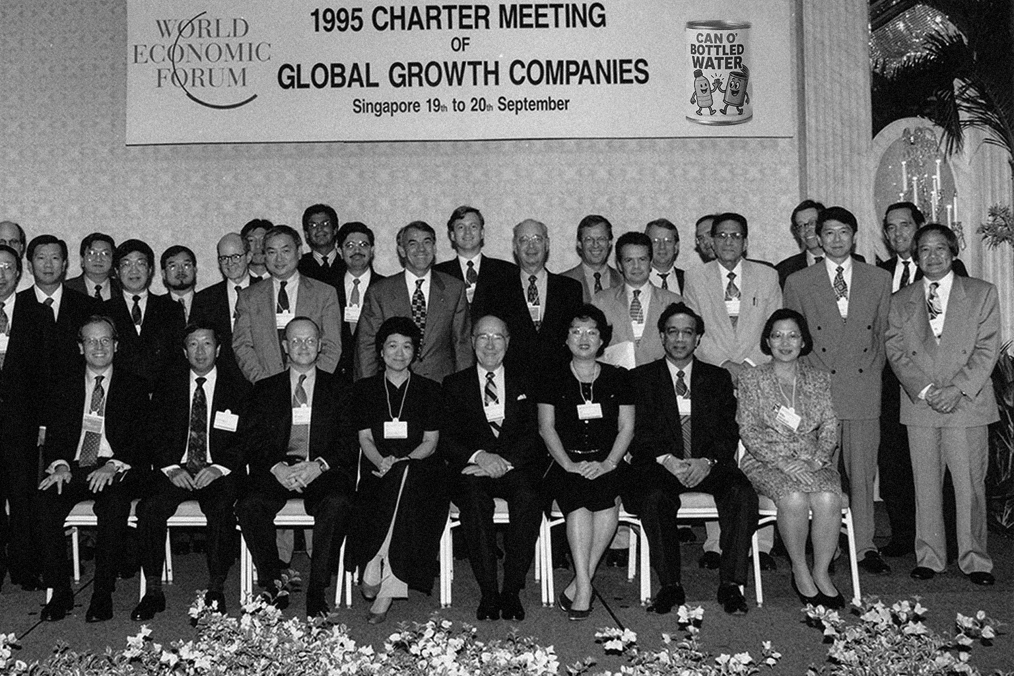
CAN O' Bottled Water appeared during the 1994-95 conference cycle, as business travel, technology summits, and executive hospitality converged around highly visible convenience goods. The product's can-and-bottle structure was framed in launch materials as protective packaging for a premium portable water format.
Distribution concentrated in airport kiosks, hotel shops, and sponsored meeting spaces. Contemporary captions often identify it less as refreshment than as a conversation object, a small but legible accessory to the emerging culture of networked business travel.
CAN O' CIRCULAR METAL THINGS
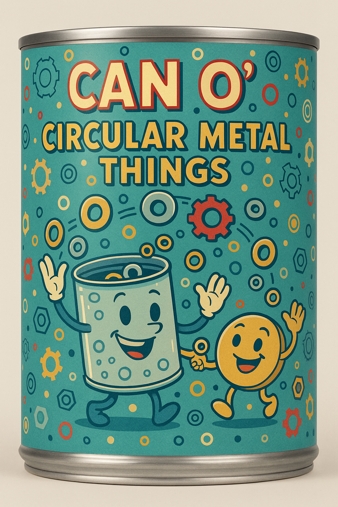
Released in 1998, CAN O' Circular Metal Things was marketed to workshops, campus labs, and small hardware retailers at a moment when digital cataloging was rapidly changing how ordinary objects were named and found. The label's refusal of specialization became its central design feature.
Industrial-design reviewers noted the clarity of the description. By grouping washers, rings, spacers, and related pieces under one plain phrase, the product suggested that accuracy and usefulness did not always require a more specific name.

CAN O' READY-TO-BAKE PIE
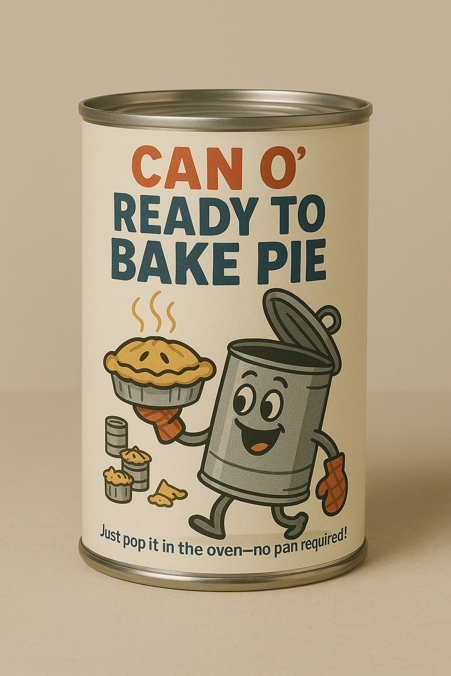
CAN O' Ready-to-Bake Pie entered test markets in 2003, the year several food-service suppliers were reassessing sealed formats for reheating, transport, and consistent portioning. The product promised a domestic result while preserving the predictability of an industrial pack.
Sales summaries show use across weeknight meals, holiday overflow, and small catering accounts. Its appeal rested on an old compromise made newly literal: the appearance of preparation without requiring the full sequence of preparation.

THE GLOW ERA
By 2025, the CAN O' mark was being referenced across pop-up retail, design-school case studies, and small cultural exhibitions concerned with continuity in consumer packaging. Its recognizability depended less on any single product than on the stability of the naming system itself.
Recent commentary describes the brand as a reusable domestic glyph: familiar, compact, and adaptable to categories that do not usually share a shelf. The result is a rare continuity object, equally at home in an archive case, a trade display, or a shopping cart.